2013年5月16日 星期四

想把盈再表變成 app

From:  mikeon88 
發表於 2013-5-16 10:23  

在評估把盈再表變成app,
一直裹足不前的原因是盈再表常常要修改,
對於只懂得BASIC的我容易自己改嗎 ?


權宗  於 2013/5/17 上午10:17 寫道:

有在討論區裡,看到Mike您打算將盈再表開發成App。
雖然我個人沒寫過App,但同事有寫過 ! (我是負責後端資料與系統架構規劃) 
故代為蒐集資料如下,請Mike您參考...

此外,Mike您打算採用的系統架構,也關係到系統的建置成本,與未來修正的彈性,
故一併幫您分析,希望對您有幫助... (請參考附件)

一、iOS 系統
企業開發者帳號: (299$US/年)
1. 僅允許內部測試 (可以用檔案方式,如 Dropbox散佈盈再表App) 不限制測試ID數。原則上,Apple 僅希望是供公司做為內部測試之用,不希望以這種方式來散佈App。
2. 一般而言,要向Apple申請得到「企業開發者帳號」並不容易。首先要有DUNS Number。DUNS Number要向美國的D&B公司申請(此D&B公司在台灣也有分公司),必須是企業才可申請,申請費用約數萬元。有了DUNS Number才可以Apple申請企業開發者帳號。
3 .以企業者開發帳號,建立出的盈再表App,沒有辦法上架App Store!
以「一般開發者帳號」建立出的App,才可申請上傳至App Store (如果Mike您有考慮要以盈再表來盈利 ? 這個帳號是沒辦法上架的哦~)

一般開發者帳號: 99$US/年
1.允許內部測試 (可以用檔案方式,如 Dropbox散佈盈再表App),但限100個ID。且每個ID都必須向Apple申購後才可使用。(Apple有提供一個開發著管理後台的網頁,供開發者上傳測試ID,此處最多僅能設定100組ID)
2.開發出來的 App,可以申請上傳至App Store。整個申請審核過程,最少需七個工作天以上,學員才有辦法更新盈再表App。

二、Android 系統
一般開發者帳號: 25$US/終生
1.允許內部測試 (可以用檔案方式,如 Dropbox散佈盈再表App),且不限測試人數。
2.開發出來的 App,可以申請上傳至App Store。整個申請審核過程,最快1-2個工作天即可完成審核作業,學員即可更新盈再表App。

盈再表App系統架構

架構一:將盈再表全部的程式碼,寫在App裡
負載:後端主機: 5%,前端手機:95%
舉例:遊戲類App程式等,皆採用此架構,相當耗手機的資源。
優點:1.全部使用手機或平板Client 端的資源。
2.要連線至Yahoo/Google抓個股的季報資料、計算淑貴價,都在手機端完成。
3.盈再表App呈現出的畫面,UI操作上較專業。
4.Mike公司不需另外架設服務主機,可節省建置/維護成本。
缺點:1. 盈再表App開發者需熟悉三種平台系統,分別使用的程式語言:
iOS: Objective-C
Android: Java
WinPhone: VB.NET 或 C#
2. 相當耗手機的資源,以Excel盈再表來看,在查詢個股時,就算以PC這麼強的效能,都會停頓數秒了,整個移植至手機,便可以預見其結果。
3.萬一遇盈再表App有Bug需修正,各平台App需各自送審App Store,需數個工作天才能更版盈再表App。

架構二:將盈再表的程式碼,寫在後端主機上;手機端僅寫APP UI界面
負載:後端主機: 50%,前端手機:50%
舉例:各券商的報價系統等,皆採用此架構。
優點:1. 部份使用手機Client 端的資源。
2. 要連線至Yahoo/Google抓個股的季報資料、計算淑貴價,都在Mike公司主機上完成。手機端僅負責資訊畫面呈現。
3. 盈再表App呈現出的畫面,UI操作上較專業。
4. Mike公司需另外架設服務主機,提高了建置/維護成本。
缺點:1.盈再表App開發者仍需相當熟悉三種平台系統,分別使用的程式語言:
iOS: Objective-C
Android: Java
WinPhone: VB.NET 或 C#
2. 萬一遇盈再表App有Bug需修正,只需修正Mike公司主機上的盈再表邏輯即可。盈再表App不需再送審。(如果盈再表App版面要調整時,App就要送審哦~)

架構三:將盈再表的程式碼、UI,都寫在後端主機上;手機端僅寫APP 外框
負載:後端主機: 95%,前端手機:5%
舉例:各新聞類的App,皆採用此架構。(如蘋果日報、NowNews等)
優點:1.使用手機Client 端很少的資源。
2.要連線至Yahoo/Google抓個股的季報資料、計算淑貴價,都在Mike公司主機上完成。手機端僅負責資訊畫面呈現。
3.盈再表App呈現出的,是網頁畫面,故UI操作起來會感覺較陽春。
4.Mike公司需另外架設服務主機,提高了建置/維護成本。
缺點:1.盈再表App開發者對三種平台系統使用的程式語言,僅需稍具瞭解即可:
iOS: Objective-C
Android: Java
WinPhone: VB.NET 或 C#
2.萬一遇盈再表App有Bug需修正,只需修正Mike公司主機上的盈再表邏輯即可。盈再表App不需再送審。(如果版面要調整時,App也不用送審,只需調整網頁即可,擁有最大彈性)


From: mikeon88
發表於 2013-5-17 10:40  

看起來答案很清楚了,
維持現狀用Excel,
才是最經濟、方便快速修改的方式。

謝謝同學提供意見。

只有期待微軟趕快把Excel VBA行動化。

1Q13波克夏賣掉GD和ADM


Warren Buffett's Berkshire Hathaway Eliminates Two Small Stakes
 Text Size  
Published: Wednesday, 15 May 2013 | 4:24 PM ET
By: 
Executive Producer
Twitter
19
LinkedIn
5
Share

Lacy O'Toole | CNBC
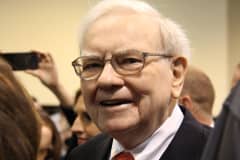
Warren Buffett at the Berkshire Hathaway Annual Shareholder's Meeting in Omaha, Nebraska.
Warren Buffett's Berkshire Hathaway has eliminated its holdings of two stocks:Archer Daniels Midland and General Dynamics, according to the quarterly filing with the SEC that lists its portfolio of U.S. publicly traded stocks as of March 31, the end of the first quarter.
Neither of the stakes were very large by Berkshire standings. The almost 6 million shares of ADM Berkshire held as of December 31 would be worth almost $207 million.
The 3.9 million General Dynamics shares held at the end of last year would be worth $297 million today.
The small size of those stakes indicates they were sold by one of Berkshire's portfolio managers, not by Buffett himself.
Warren Buffett: Bonds Are 'Terrible' Investment Right Now
Warren Buffett tells CNBC's Becky Quick that people could lose a lot of money in long-term bonds when interest rates inevitably start to rise.
Buffett has said that the portfolio managers, Todd Combs and Ted Weschler, don't need and don't get his approval before buying or selling shares.
At this year's shareholders meeting, Buffett said they sometimes buy things he wouldn't buy just as he buys things they wouldn't want in their portfolio.
Berkshire added a 6.5 million share stake in Chicago Bridge & Iron. It's worth $375 million at today's close and was almost certainly also bought by a portfolio manager rather than Buffett.
Despite its name, the energy infrastructure company is based in the Netherlands.
Berkshire added to one bank stake while shedding shares of another. It cut its BNY Mellon holding by 3.5 percent to 18.9 million shares while increasing its stake in Buffett favorite Wells Fargo by 4.2 percent to 458.2 million shares. As of today's close, Berkshire owns $18 billion worth of the bank's stock, its largest single stake.
Berkshire increased its stake in DirecTV by 9.5 percent to 37.3 million shares, and in Wal-Mart by 3.7 percent to 49.2 million shares.
There are two big percentage moves by Berkshire. It cut its stake in Mondelez International by 45.1 percent to 7.05 million shares while increasing its National Oilwell Varco stake by 41.4 percent to 7.48 million shares.
Berkshire's stake in Kraft Foods fell 4.0 percent to 1,602,061 shares.
Berkshire more than doubled its stake in Verisign, taking it to 8.2 million shares from the 3.7 million it reported for the end of the fourth quarter.
A 5.6 million shares stake in Starz is a new Berkshire stake. The company was created by Berkshire holding Liberty Media in a January spin-off.
An increase for DaVita Healthcare Partners to 14.97 million shares had been previously disclosed by Berkshire.
The total market value of Berkshire's disclosed holdings topped $85 billion as of March 31. That's an increase of 12.9 percent from $75.3 billion at the end of December.

2013年5月1日 星期三

外資的陰謀

From: King818 
發表於 2013-4-26 05:42

五月賣股度假去-高盛-不-股市正旺-未來3個月應加碼


From: Rhroan 
發表於 2013-4-28 00:08  

如果沒人來接手,他們怎麼脫身呢 ?


From: mikeon88 
發表於 2013-4-28 08:20  

高盛證券是 sell side,
寫研究報告建議客戶買賣,
本身並無股票部位,哪有貨可出 ?

它的客戶國外的基金公司才是 buy side,
買賣股票的法人,才有貨出。

電視上的老師解盤都在解外資,
他們都是沒做過外資的人, 卻在講外資。
說外資故意在現貨買超,卻在期貨佈空單,再借券放空......,
講得活靈活現,好像外資就坐在他隔壁的同事。

這是錯把外資當作一個人來討論,
一個人才有交易動機可言,為何要買?為何要賣?
外資是散佈在世界各地互不相干的法人,
有何交易動機 ?
這就像我跟阿土伯兩人互不認識,
把我倆的買賣超加起來,說「麥土伯在幹嘛!」,
這豈不是很可笑嗎 ?

電視的老師更喜歡把外資妖魔化,
說外資券商出了一份買進的報告,卻反而在賣股票。
這純粹是他的客戶不buy他的story罷了,
研究員推薦買進,
他的客戶不一定都會買單,可能反向賣出。
不要以為天王分析師寫的報告就比較有影響力,
一樣被壓在每天都會收到的一大疊報告底下,
頂多拿出來瞄個標題一眼而已。

有人說,外資故意出一篇買進報告,
又另外寫一本賣出報告來欺騙投資人,
這是沒寫過研究報告的人才會這樣說,
因為他們不知寫一份20頁報告要花多少時間。
至少一個月,要熬夜加班,被主管改得體無完膚才成,
寫了一份買進報告哪還有體力再出一篇賣出的報告。
而且若客戶同時拿兩份報告來質問,
不就信譽掃地。

外資喊的目標價太高或太低,
也非惡意,只是看不準而已,
市場上真正準的分析師本來就不多。

外資的研究方法用了太多的預測,
預測通常不準。
另外市場上9成的人都是看趨勢,
看趨勢的人容易有越漲越看好,越跌越悲觀的偏差。

不像我們是價值投資,
漲高覺得貴,跌低了反而高興撿便宜。
只是價值投資者在市場上是少數。

最後,我對主管機關在護盤時會找外資券商來喝咖啡,
也很吃驚 !! 怎麼會這樣沒常識 ?
外資券商只是營業員而已,
可以限制外國客戶不要賣股票嗎 ?

2013年4月29日 星期一

何必來上課 ?

From: Hirota 
發表於 2013-4-30 00:42  

上完這個巴菲特班有個體驗,
跟旁人分享明牌是沒有用的。

之前在讀書會時,有跟同學分享過華固這檔股票,並將投資理念做分享。
結果同學聽了之後,有的認同後有買進,
但是過陣子再問的時候,又賣掉了,
當然是有一大堆有的沒的理由。

就跟MIKE書上寫的,
明明教的是太極拳,
但後來又會跳成霹靂舞。


From: mikeon88 
發表於 2013-4-30 06:08  

是哩!這正是其中奧妙之處。
有人說,巴菲特班的明牌都貼在討論區了,
何必來上課 ?
殊不知重點不在明牌,
而在於觀念要通,
才知何時買,才能抱得住,賺到大錢。

也有人覺得每次上課內容都差不多,
聽過一遍就以為懂了。
要能做得到,不是懂了而已,
而是要達到信仰的境界,
需要經過幾次的回鍋與實際操作經驗的檢討,
把整個道理徹底融會貫通才做得到。
如同孫中山所講的:「思想產生信仰,信仰才有力量」。

這是為何要請同學多來回鍋,多跟我們討論的原因,
本班的價值就在於此。

同學問,為何這麼好願意讓同學免費不限次數來回鍋 ?
我只是覺得既然收了人家6千元就有義務教到會為止罷了。

讓同學來回鍋也表示我的自信,
我的方法經得起考驗,
不怕人家來踢館。

2013年4月23日 星期二

用合併報表分析償債能力是錯誤的

From: weyzhiro
發表於 2012-10-27 02:56

最近合併報表現金約1.5億,短期借款約1.9億,
應該可以周轉過去…


From: mikeon
發表於 2012-10-27 18:23

早上看到這一段分析覺得怪怪的,
剛好今天有一位會計師同學來上課,
特地請教她。
「現金1.5億,短期借款1.9億,應該可以周轉過去」??
這應該用非合併報表來看,而不是合併報表,
因為子公司的現金實際上不可能給母公司來用,
所以用合併報表分析償債能力是錯誤的。


From: weyzhiro 
發表於 2012-10-27 19:49

今年我有投資奇美電,原因很簡單,
因為他有郭董當富爸爸,即使他負債很高......


From: mikeon
發表於 2012-10-28 03:51

同學舉的奇美電剛好是個反證。
即便鴻海是富爸爸,
鴻海的股東願意讓鴻海去償還奇美電的負債嗎?
這違反股份制原則,
當股東頂多把投資金額賠光就算了,
竟然還要去分擔轉投資的負債,
這是個無底洞誰敢投資?
清楚顯示用合併報表的現金與負債去分析償債能力是錯誤的


Bruce 發表於 2013-8-7 13:44  

富爸爸投資法行不通
這個就是一個案例
爛公司就是風險高

奇力歇業,富爸爸群創欲冷眼旁觀


2013年4月20日 星期六

教大家怎麼看營收

每當有人說我不懂得看營收時,我都很想笑。 
他們忘了我是外資研究員出身的,
從20多年前當研究員的第一天起就知道要看營收。
我寫過20-30頁個股大報告好幾本,
不僅翻爛過財報、公開說明書、剪報、產業報告、公司拜訪過好幾次,
要分析到多細都做過。
那些只是每個月追蹤營收或翻幾頁財報,就自以為在分析公司的人,
才是沒寫過研究報告的「外行人」。
現在我就來教大家怎麼分析營收:
追蹤營收不是只看它的成長率,
因為那沒預測性,這個月營收成長,不代表接下來仍會成長。
營收要怎麼分析 ? 要把它拆開,
sales breakdown by product 或 by customer。
by product要看它哪幾樣產品賣得好,
未來能否賣得更好 ? 要去了解它的產品的功能、市場性,
根據供需關係去做市場預測。

by customer要知道前10大客戶是哪幾家 ?
這些客戶的前景又是如何,
就像鴻海的最大客戶是蘋果,占營收4成,
要分析蘋果的產品前景,
才能預估出鴻海營收未來的成長性。

分析過營收之後,接下來要看cost structure,
要知道各產品的成本結構,毛利率
甚至要做敏感度分析,
看各種材料價格上升多少會讓成本增加多少 ?
像IC封裝的材料molding compound、連接線金或銅占成本多少,
1994年Sumitomo的epoxy resin廠爆炸,
就得估出對IC封裝的成本增加多少 ?
這才是成本分析。

講了這麼多,應該知道怎麼分析營收了吧,
絕非只是追蹤成長率那麼膚淺。

以上就是我當研究員的日常工作,
只不過我越來越不認為這是一套對的方法。
就像外資楊應超寫的鴻海聖經,
一定跟郭台銘搞得很熟才能寫出那麼多內部細節,
結果呢 ? 最近把鴻海的目標價調低了。
為什麼 ? 因為外資那一套分析方法也看不了太遠 !!

我現在認為巴菲特的方法才能看得更遠,
一家公司若
1. 過去展現過高ROE的記錄,
2. 配得出現金,
3. 產業地位穩固
就幾乎可以確定是能維持高ROE的公司,
縱使還有少許不確定的部份就透過多種果樹把變壞的風險限制住。
接下來只要在股價便宜時買進,
便保證投資報酬率最大,
除此之外還需知道其它什麼東西呢 ?

跟我一樣把整個道理想通的人,
就曉得真的就這麼簡單了。

請同學好好看一下年報,看巴菲特怎麼分析公司,
是不是我的方法跟衪最接近 !

波克夏年報最精華的一段
若沒時間看完年報,只看這一段就好

2007年報
Businesses – The Great, the Good and the Gruesome
Let's take a look at what kind of businesses turn us on. And while we're at it, let's also discuss what we wish to avoid.
Charlie and I look for companies that have a) a business we understand; b) favorable long-term economics; c) able and trustworthy management; and d) a sensible price tag. We like to buy the whole business or, if management is our partner, at least 80%. When control-type purchases of quality aren't available, though, we are also happy to simply buy small portions of great businesses by way of stockmarket purchases. It's better to have a part interest in the Hope Diamond than to own all of a rhinestone. A truly great business must have an enduring "moat" that protects excellent returns on invested capital. The dynamics of capitalism guarantee that competitors will repeatedly assault any business "castle" that is earning high returns. Therefore a formidable barrier such as a company's being the lowcost producer (GEICO, Costco) or possessing a powerful world-wide brand (Coca-Cola, Gillette, American Express) is essential for sustained success. Business history is filled with "Roman Candles," companies whose moats proved illusory and were soon crossed. Our criterion of "enduring" causes us to rule out companies in industries prone to rapid and continuous change 能好很久的標準讓我們排除快速變遷的產業. Though capitalism's "creative destruction" is highly beneficial for society, it precludes investment certainty. A moat that must be continuously rebuilt will eventually be no moat at all.
Additionally, this criterion eliminates the business whose success depends on having a great manager. Of course, a terrific CEO is a huge asset for any enterprise, and at Berkshire we have an abundance of these managers. Their abilities have created billions of dollars of value that would never have materialized if typical CEOs had been running their businesses.
But if a business requires a superstar to produce great results, the business itself cannot be deemed great. A medical partnership led by your area's premier brain surgeon may enjoy outsized and growing earnings, but that tells little about its future. The partnership's moat will go when the surgeon goes. You can count, though, on the moat of the Mayo Clinic to endure, even though you can't name its CEO.

Long-term competitive advantage in a stable industry is what we seek in a business 在穩定的產業中具有長期的競爭優勢是我們尋找的企業. If that comes with rapid organic growth, great. 高ROE+高成長=great。But even without organic growth, such a business is rewarding. We will simply take the lush earnings of the business and use them to buy similar businesses elsewhere. There's no rule that you have to invest money where you've earned it. 高ROE但無法高成長=good,只要把配出來的現金再去找別的投資標的即可。
Indeed, it's often a mistake to do so: Truly great businesses, earning huge returns on tangible assets, can't for any extended period reinvest a large portion of their earnings internally at high rates of return. ROE卻配不出現金,不易長期維持高ROE。
Let's look at the prototype of a dream business, our own See's Candy. The boxed-chocolates industry in which it operates is unexciting: Per-capita consumption in the U.S. is extremely low and doesn't grow. Many once-important brands have disappeared, and only three companies have earned more than token profits over the last forty years. Indeed, I believe that See's, though it obtains the bulk of its revenues from only a few states, accounts for nearly half of the entire industry's earnings.
At See's, annual sales were 16 million pounds of candy when Blue Chip Stamps purchased the company in 1972. (Charlie and I controlled Blue Chip at the time and later merged it into Berkshire .) Last year See's sold 31 million pounds, a growth rate of only 2% annually. Yet its durable competitive advantage, built by the See's family over a 50-year period, and strengthened subsequently by Chuck Huggins and Brad Kinstler, has produced extraordinary results for Berkshire .
We bought See's for $25 million when its sales were $30 million and pre-tax earnings were less than $5 million. The capital then required to conduct the business was $8 million. (Modest seasonal debt was also needed for a few months each year.) Consequently, the company was earning 60% pre-tax on invested capital. Two factors helped to minimize the funds required for operations. First, the product was sold for cash, and that eliminated accounts receivable. Second, the production and distribution cycle was short, which minimized inventories.
Last year See's sales were $383 million, and pre-tax profits were $82 million. The capital now required to run the business is $40 million. This means we have had to reinvest only $32 million since 1972 to handle the modest physical growth – and somewhat immodest financial growth – of the business. In the meantime pre-tax earnings have totaled $1.35 billion. All of that, except for the $32 million, has been sent to Berkshire (or, in the early years, to Blue Chip). After paying corporate taxes on the profits, we have used the rest to buy other attractive businesses. Just as Adam and Eve kick-started an activity that led to six billion humans, See's has given birth to multiple new streams of cash for us. (The biblical command to "be fruitful and multiply" is one we take seriously at Berkshire .)
There aren't many See's in Corporate America. Typically, companies that increase their earnings from $5 million to $82 million require, say, $400 million or so of capital investment to finance their growth. That's because growing businesses have both working capital needs that increase in proportion to sales growth and significant requirements for fixed asset investments.
A company that needs large increases in capital to engender its growth may well prove to be a satisfactory investment. There is, to follow through on our example, nothing shabby about earning $82 million pre-tax on $400 million of net tangible assets. But that equation for the owner is vastly different from the See's situation. It's far better to have an ever-increasing stream of earnings with virtually no major capital requirements. Ask Microsoft or Google.
One example of good, but far from sensational, business economics is our own FlightSafety. This company delivers benefits to its customers that are the equal of those delivered by any business that I know of. It also possesses a durable competitive advantage: Going to any other flight-training provider than the best is like taking the low bid on a surgical procedure.

Nevertheless, this business requires a significant reinvestment of earnings if it is to grow. When we purchased FlightSafety in 1996, its pre-tax operating earnings were $111 million, and its net investment in fixed assets was $570 million. Since our purchase, depreciation charges have totaled $923 million. But capital expenditures have totaled $1.635 billion, most of that for simulators to match the new airplane models that are constantly being introduced. (A simulator can cost us more than $12 million, and we have 273 of them.) Our fixed assets, after depreciation, now amount to $1.079 billion. Pre-tax operating earnings in 2007 were $270 million, a gain of $159 million since 1996. That gain gave us a good, but far from See's-like, return on our incremental investment of $509 million. Consequently, if measured only by economic returns, FlightSafety is an excellent but not extraordinary business. Its put-up-more-to-earn-more experience is that faced by most corporations. For example, our large investment in regulated utilities falls squarely in this category. We will earn considerably more money in this business ten years from now, but we will invest many billions to make it.
Now let's move to the gruesome. The worst sort of business is one that grows rapidly, requires significant capital to engender the growth, and then earns little or no money. Think airlines. Here a durable competitive advantage has proven elusive ever since the days of the Wright Brothers. Indeed, if a farsighted capitalist had been present at Kitty Hawk , he would have done his successors a huge favor by shooting Orville down.
The airline industry's demand for capital ever since that first flight has been insatiable. Investors have poured money into a bottomless pit, attracted by growth when they should have been repelled by it. And I, to my shame, participated in this foolishness when I had Berkshire buy U.S. Air preferred stock in 1989. As the ink was drying on our check, the company went into a tailspin, and before long our preferred dividend was no longer being paid. But we then got very lucky. In one of the recurrent, but always misguided, bursts of optimism for airlines, we were actually able to sell our shares in 1998 for a hefty gain.
In the decade following our sale, the company went bankrupt. Twice.
To sum up, think of three types of "savings accounts." The great one pays an extraordinarily high interest rate that will rise as the years pass. The good one pays an attractive rate of interest that will be earned also on deposits that are added. Finally, the gruesome account both pays an inadequate interest rate and requires you to keep adding money at those disappointing returns.


好學生特質:
產品不變+高市占
產品會變+多角化

2013年4月15日 星期一

臭屁有理 !!

From: 老男人 
發表於 2013-4-15 11:52  

mike 桑: 感謝你的回答。
我是在2011年中把巴菲特班部落格加入我的最愛,不定時會上去瀏覽,
直到2011年底你振臂高呼,力排眾議大戰群雄
(於同學討論區應該找得到,也有很多同學不認同和懷疑),
2012年第一季應為GDP最低點,該進去種樹了。
我還不以為意,直到2013年初才知又錯過了一個循環,
只因當下網路上,2012年前兩季均無人有如此前瞻,
(看前兩季成交量萎縮便知)
先知也 ! 臭屁有理 !!
也只能乖乖的讓你賺那5,530(便當兼講義扣掉),
兩天下來更覺得你真的是高人.........

對不起我所提問的問題提議不清,
應是您如何知道2012年第一季的0.6和第二季的-0.1是最低點開始反轉,
而不是再繼續往下,
當時大盤指數7,000-7,500點,很多人都覺得應會繼續探底,
主計處所提供的數據,我知道只是參考,
但那轉折點如何去判斷出來,
笨學生謝謝你的指教。
而GDP理論準確性我是相信的,
主計處修正預估我也認同你的看法。
根據YoY去判斷又是為何 ?
請不要說我不認真ㄛ,因我都沒打瞌睡,
是因為天資魯鈍。
唉 ! 我也想蹲馬桶悟道,但凡夫俗子怎有能耐...

From: hyc (Shangri-La) 
發表於 2013-4-15 15:04  

上課之前我是當家裡的女王耳提面命提醒我不可以買股票的時候,
通常是市場最悲觀時,
我也是去年第一季瞞著她慢慢買入,
去年度的總資產投報率7%,
今年到三月底已經達到去年相同投報率。
雖然投報率不高(持股比例的管控也是原因之一),
但現在女王也開始信任GDP理論 & 盈再表了 ! 
每當討論入圍名單時,她第一句話:預期投資報酬率 ?

四月初到今天止已出清完一些預期報酬率較低的股票,
一部分轉入預期投報率較高的股票,一部分伺機而動.....
這些也都要感謝Mikeon於去年初買入訊號的提醒


From: vivian(景月) 
發表於 2013-4-16 11:15  

我是2010年上課的,mike說1Q是GDP高點,要減碼。
所以就把手上的股票賣了,尤其是中鋼和裕民等景氣循環股。
現在看來是對的,因為它們已經回到我當初的買價了。

2011年1Q是GDP低點,要買股票,大盤卻一直創新高,
很多同學出來質疑GDP理論不準,其實我內心也有很多雜音。
但Mike一直提醒這是因為景氣循環延長,股票更貴了,更要忍住不要買,
後來我想可能是太多人煩了,
所以mike提供真的忍不住的同學想買就買1/3吧。
我就手癢進去買了一點,這些持股,目前損失10%~20%
現在看來我是錯的。
早知就聽mike的,要忍住不買。

再來,就是2012年1Q是GDP低點,至少要買1/3的股票,
我立刻就進場買了,畢竟我可是等了很久了。
這些持股目前報酬率看來還滿好的,
有小賺5%至10%和報酬率超過50%以上的。
最近打算把接近貴價的股票賣掉了。
這看來也是做對的哦!

謝謝Mike!
也希望mike秉持初衷,
在該買和該賣時,還是能跳出來提點同學。
呵呵!這是我回應的最主要目的。